
HBO's "Happy and You Know It" explores why children’s music deserves more respect
- Dec 26, 2025
- 5 min read
Updated: Jan 6
Reel Perspectives
December 26, 2025
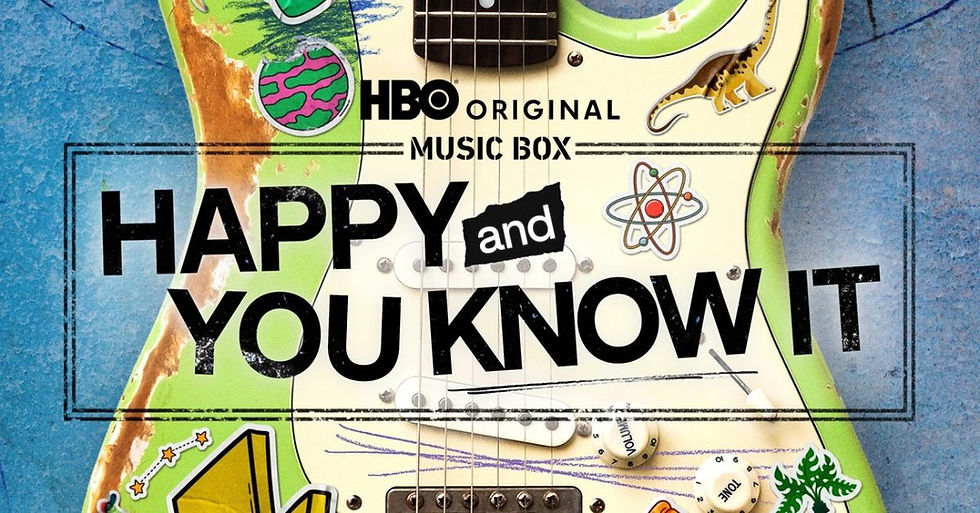
Director Penny Lane explores why children’s music deserves more respect—and still knows how to move us
Clap Your Hands or Not, Children’s Music Still Matters
Do you remember the first children’s song you ever heard?
Mine was “Itsy Bitsy Spider”—right alongside “You Are My Sunshine” and “Old MacDonald Had a Farm.” Long before playlists and algorithms, those songs taught me how music could feel: simple, repetitive, and weirdly unforgettable.
So, if you’re truly “happy and you know it,” get ready to clap your hands for HBO’s Music Box: Happy and You Know It, the final entry to this year's Music Box documentary series that premiered on December 25—and one of its most quietly radical offerings yet. Directed by Penny Lane, the film reframes children’s music as a genre that’s routinely dismissed, terminally uncool, and yet foundational to how many of us first learned to feel music at all.
Lane makes a smart and subversive choice: she centers the story on its most honest critics—kids. Between candid reactions, joyful chaos, and tiny humans cutting straight to the emotional core, children explain what they love about kids’ concerts. One young fan sums it up perfectly: “I like sitting next to my mom.”
That’s not just cute—that’s the heart of it.
Children, the film reminds us, are brutally honest audiences. There’s no politeness buffer, no nostalgia goggles. They’re either engaged—or they’re not.
That same honesty echoes through the artists who’ve dedicated their careers to this space. The Wiggles' founding member, Anthony Field, jokes that parents approach him, unsure whether they want to celebrate him or fight him on sight:
“Parents don’t know whether they want to strangle me or give me a pat on the back.”
And it’s a laugh line with teeth.

The Wiggles’ music can be repetitive—sometimes aggressively so—but that repetition is deliberate, developmentally tuned, and wildly effective. With billions of streams and generations of kids raised on their songs, their longevity exposes how deeply misunderstood children’s music remains. This isn’t accidental success. It’s strategy, stamina, and care.
Then there’s Laurie Berkner, who gets her own quietly powerful chapter. Berkner performs at county fairs and intimate venues with a guitar, a mischievous grin, and stuffed animals perched on her head—meeting kids exactly where they are. A former preschool music teacher, Berkner learned early that connection matters more than polish. Her songs—about dinosaurs, feelings, and everyday wonder—move at what she calls a “human tempo,” designed to match how kids actually experience the world. She isn’t performing for children; she’s collaborating with them, letting curiosity lead and joy do the rest.

The documentary then pivots to reinvention with Caspar Babypants, the delightfully surreal alter ego of former Presidents of the United States of America frontman Chris Ballew. Ballew describes his move from rock stages to playrooms not as a step down, but as creative liberation:
“Casper was all about taking that outer shell off and just revealing the innocent core.”
Free from the pressure to be cool, ironic, or marketable, Ballew found that kids’ music made honesty easier—not harder. The shift from mosh pits to toddler dance circles wasn’t a loss of credibility; it was a return to play.
The documentary’s most electric—and culturally resonant—moments arrive with Divinity Roxx, former Beyoncé bassist and co-musical director, now a Grammy-nominated children’s artist. Roxx puts the biggest myth about children’s music to rest in one sentence—it’s not easy to do, well, because:
“Kids are very honest. They’re either going to be into it or not.”
Her music, infused with jazz fusion and hip-hop DNA from A Tribe Called Quest, Slick Rick, and Busta Rhymes, refuses to talk down to kids—or their parents. Bass solos at children’s concerts aren’t a gimmick; they’re a statement. Roxx’s work insists that children deserve musical excellence, not shortcuts. And she isn’t alone. The genre is quietly—but decisively—expanding to embrace more diverse sounds and voices, with artists like Jazzy Ash, 123 Andrés, and Christina Perri reshaping what children’s music can sound like, look like, and feel like.

As Roxx creatively puts it:
“It just inspires you to do more, to keep going. And now I’m thinking, okay, what’s this next record going to sound like?”
Music critics Rob Harvilla and Willa Paskin widen the lens, breaking down what makes a children’s song work: lots of movement, a sticky hook, repetition, and surprise—often delivered in seven-second intervals. Paskin also addresses the darker side of the genre’s digital explosion, from algorithm-driven “AI slop” to the Baby Shark legal saga involving Johnny Only and Pinkfong. What emerges isn’t just a copyright dispute, but a warning: when volume replaces intention, something essential gets lost.
Still, Happy and You Know It never loses sight of why this music exists in the first place. Caspar Babypants articulates the real magic behind the sound:
“Making music for families is this huge opportunity to create a bonding experience, to really have those two generations glued together through a love of sound and lyrics and melody.”
By the time the credits roll, the message lands. Clap along or not, it’s clear that children’s music is needed more than ever. Children’s music isn’t disposable. It isn’t easy. And it still matters. It’s one of the few spaces where music still lets your inner child show up and be taken seriously.
Alright, family—what’s your go-to children’s song? No judgment.
🎧 Behind the Music 🎧
The Music Box documentary series, created by Bill Simmons, has carved out a distinct lane on HBO by spotlighting pivotal, often overlooked corners of music culture. The series is guided by Penny Lane, the award-winning filmmaker behind HBO’s Listening to Kenny G, whose work excels at balancing sharp critique with genuine curiosity. Across its run, Music Box has explored artists and genres with a mix of cultural context, industry insight, and emotional nuance. Rather than chasing easy nostalgia, the series asks why certain sounds endure—and what they reveal about the audiences who love them. Happy and You Know It fits squarely within that mission, turning its focus to a genre that shapes listeners long before they know how to name it.
🎶 Dat Reel Music Box Rating: 8 out of 10 Baby Sharks 🎶 A thoughtful, charming documentary that makes a strong case for children’s music as a serious art form, even if it doesn’t linger as long as some of Music Box’s most resonant entries. Music Box: Happy and You Know It shines in its cultural reframing and joyful moments—especially in highlighting artists who take young audiences seriously—but its wide scope occasionally feels rushed, moving quickly between voices that could each support a deeper dive. While it doesn’t carry the same emotional staying power as Have You Seen Me Lately?, it still succeeds in reminding viewers why this genre matters—and why reconnecting with your inner child can be its own quiet reward.
HBO’s Music Box: Happy and You Know It is available now on HBO and HBOMax.


Comments