
The Walking Dead: Dead City Season 3 Review – Maggie and Negan Finally Move Forward
Updated: Jul 26
Reel Perspectives
July 22, 2026
Can Maggie put the death of Glenn behind her and successfuly move on?
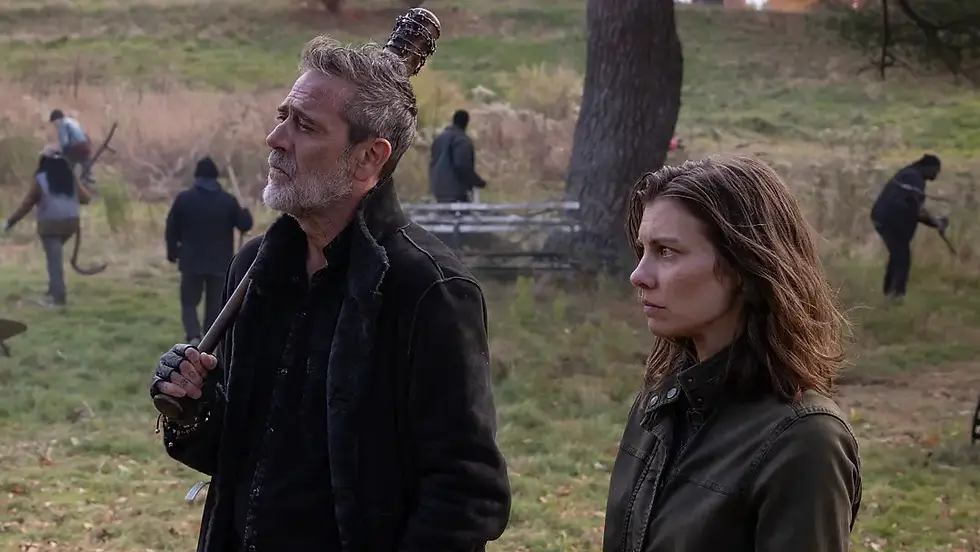
For nearly a decade, The Walking Dead Universe has been haunted by one defining moment.
Negan (Jeffrey Dean Morgan), armed with Lucille and a sadistic grin, played a chilling game of "eenie, meenie, miney, moe" before brutally bludgeoning Glenn Rhee to death in front of his pregnant wife, Maggie (Lauren Cohan). It remains one of the most shocking - and polarizing - moments in television history. The scene fundamentally changed the DNA of the franchise, fractured its fanbase, and forever intertwined two characters who, under any other circumstances, would have never shared the same story.
Since then, Maggie and Negan's relationship has been built almost entirely on grief, guilt, resentment, and reluctant survival. Every reunion carried the same question: Could Maggie ever forgive the man who murdered Glenn? For years, The Walking Dead struggled to answer that question in a satisfying way. Instead, viewers were caught in a repetitive cycle. Maggie wanted Negan dead and Negan attempted to prove he was no longer the monster he once was. Circumstances forced them to cooperate, only for the emotional reset button to be pressed yet again. What initially felt like authentic trauma eventually became predictable storytelling. Maggie threatening to kill Negan became less of a compelling character beat and more of a running gag that had simply worn out its welcome.
Thankfully, Dead City Season 3 recognizes that both the audience and these characters deserve something better. Under new showrunner Seth Hoffman, alongside executive producer and The Walking Dead Universe chief content officer Scott M. Gimple, the series finally finds the emotional clarity that has eluded it since the flagship series concluded. Rather than pretending Maggie has suddenly forgiven Negan, the season embraces a far more mature and emotionally honest idea. This story isn't about forgiveness. It's about acceptance.
Can Maggie truly forgive the man who laughed while taking pleasure in brutally murdering her husband?
No. Nor should she.
One of the season's greatest strengths is understanding that forgiveness was never the destination. Acceptance is. Maggie realizes she cannot continue allowing hatred to dictate every decision she makes. Carrying that anger has defined her life for years, but it has also prevented her from truly moving forward. Likewise, Negan no longer expects redemption to erase his sins. He understands that no amount of heroism can undo what happened that night. Over the years, he has saved Maggie's life, and Hershel's, countless times, often placing himself in harm's way when he had every reason to walk away. Whether motivated by guilt, obligation, genuine remorse, or all three, those actions have repeatedly begged the same question: How many times does Negan have to save Maggie before she forgives him?
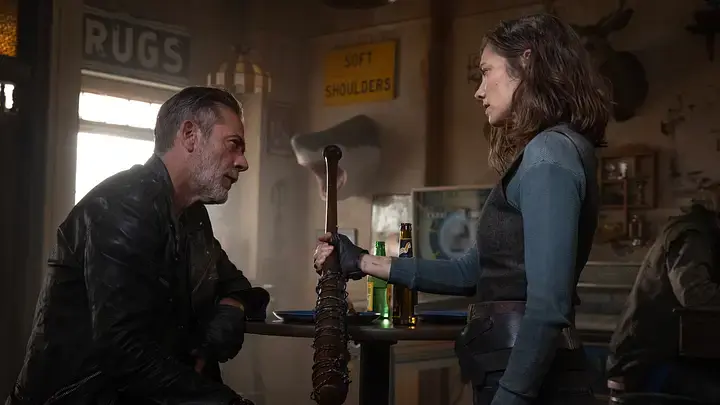
Season 3 wisely answers that question with refreshing honesty because forgiveness was never something he was owed. Rather than trying to erase history, Dead City acknowledges that Maggie and Negan will forever be connected by it. Their shared trauma has become part of who they are, and while trust can never erase the past, it can create the possibility of a future. The series carefully builds that trust throughout the season, resulting in the most authentic and emotionally satisfying version of their relationship we've seen. Perhaps the season's boldest creative choice is inviting viewers to imagine what once seemed impossible: What if Maggie and Negan could actually become friends? Two people capable of respecting one another after years of unimaginable pain.
It's a risky proposition. Perhaps for the first time, Dead City invites audiences to imagine a fascinating "what if?" scenario in an alternate universe. What if Maggie and Negan weren't forever imprisoned by the worst day of their lives? What if they actually became genuine friends in another version of this universe? It's an audacious idea that once seemed impossible, yet the season carefully lays the emotional groundwork to make it believable.
Back in post-apocalyptic Manhattan, Maggie is determined to build a future where communities can coexist and outsiders are welcomed rather than feared. Negan, shaped by years of experience, remains skeptical. Their philosophical differences create compelling conflict without reverting to the endless revenge narrative that had begun to exhaust itself.
This season presents a Negan who feels noticeably older, wiser, and more reflective. Jeffrey Dean Morgan delivers one of his finest performances in years, effortlessly balancing the character's trademark swagger and biting humor with genuine vulnerability. His iconic one-liners are still here, and they'll undoubtedly delight longtime Negan fans, but there's a quieter maturity that gives the performance new emotional weight.
Lauren Cohan is equally exceptional. She portrays a Maggie who is no longer consumed solely by grief but is instead trying to figure out who she can become after carrying that grief for so many years, with a heartbreaking scene of nostalgia and finding what was lost. It's arguably the most relatable and emotionally grounded Maggie has been since the earlier seasons of The Walking Dead.
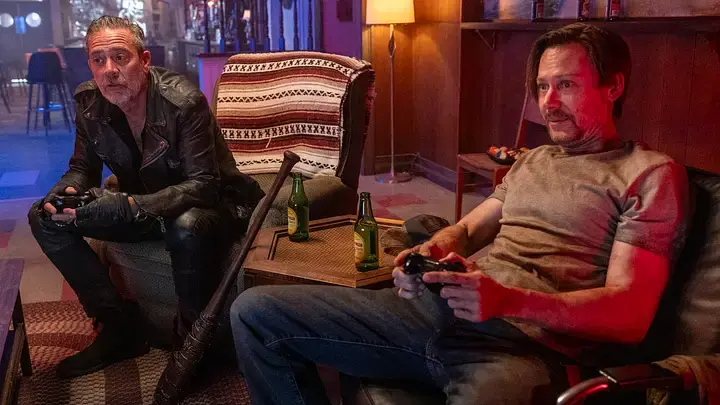
The supporting cast also elevates the season. Jimmi Simpson is utterly captivating as Dillard, delivering one of the franchise's strongest new characters in years. His unpredictable arc becomes one of the season's biggest highlights. Raúl Castillo brings warmth and optimism as Luis, offering Maggie a glimpse of hope and possibility, while Aimee Garcia impresses as Renata, more than holding her own alongside Morgan and Cohan. Logan Kim continues to shine as Hershel Rhee. Watching Glenn's son mature into his own person provides some of the season's most rewarding moments, particularly for longtime fans who have followed this family since the beginning.
Yet despite all of its strengths, the season isn't flawless. Its biggest weakness is one of omission. Its biggest missed opportunity is its reluctance to fully confront the elephant in the room. At one point, Maggie tells Negan that he couldn't possibly hurt her more than he already has. Fans instantly understand what she means, but the series never allows the two to have the brutally honest conversation they've been avoiding for nearly a decade. Rather than directly addressing Glenn's murder with the emotional honesty it deserves, the show largely leans on Negan's redemption arc to carry their newfound understanding.
A raw, unfiltered exchange, one that revisited that horrific night without trying to soften or sanitize it, could have become one of the greatest scenes in franchise history. Instead, the show chooses restraint where complete emotional honesty may have been more satisfying. Rather than risking reopening old wounds, the series chooses to quietly move beyond them. While that decision serves the season's broader narrative, longtime fans may leave wishing that final emotional reckoning had finally arrived.
Still, what Dead City, Season 3 accomplishes is undeniably significant. After years of watching Maggie and Negan circle the same emotional battlefield, the series finally gives them permission to become something new. Their relationship no longer exists simply to remind audiences of Glenn's death. Instead, it becomes a story about survival, accountability, growth, and the difficult reality that moving forward doesn't always require forgiveness.
Dead City finally charts a new direction. One built not on forgetting the past, but on acknowledging it while refusing to let it dictate every future decision.

By refreshing its central relationship, Dead City also reinvigorates itself. The result is easily the most compelling version of their relationship to date.
More importantly, it opens the door to future possibilities that once seemed unimaginable. Rather than repeating familiar conflicts, the series breathes fresh life into its central duo and reinvigorates Dead City in the process.
Jeffrey Dean Morgan and Lauren Cohan have never been better together. Their chemistry has evolved from combustible hatred into something infinitely more nuanced. An uneasy bond forged through years of shared trauma, sacrifice, and reluctant understanding.
And for the first time in years, Dead City feels like it's moving forward alongside its characters instead of remaining trapped in its past.
The Walking Dead: Dead City Season 3. The third season premieres Sunday, July 26 at 9pm ET/PT on AMC and AMC+.


Comments